
Table of Contents
ToggleHow Kids Can Learn Quran Easily: A Parent's Guide to a Fun and Spiritual Journey
Teaching the Holy Quran (القرآن الكريم) to your children is one of the most beautiful and rewarding investments a parent can make. However, many parents living in Western countries worry that learning a new language and memorizing complex verses might overwhelm their kids.
The secret? It does not have to be overwhelming! If you are wondering how kids can learn Quran easily, the trick is to make the process engaging, interactive, and consistently positive. Here is a comprehensive, step-by-step breakdown of how you can transform your child’s Quranic journey from a chore into a joyful daily adventure.
1. Start Early and Make It a Blast
The Sooner, The Better: Children, especially toddlers and preschoolers (ages 3 to 6), have astonishing memory retention. Their brains are like sponges. While there is no single “perfect” age, getting them started young helps build a natural, effortless connection with the sounds of the Quran.
Play to Learn: This is the golden rule. Learning the Quran should never feel like strict schoolwork. Instead, try using:
Quranic Stories: Kids naturally love storytelling. Share captivating tales about the Prophets (Anbiya’ – الأنبياء) and Islamic values. Use colorful storybooks, animated videos, or even put on a little bedtime puppet show.
Games & Quizzes: Introduce Quranic Bingo, memory matching games with Arabic letters, or simple trivia. Friendly competition with small prizes keeps their motivation incredibly high.
Interactive Tech: Utilize awesome Islamic educational apps designed specifically for kids. Bright colors, rewarding sounds, and cool animations make learning the alphabet and basic Tajweed super interactive.
2. Build a Solid, Simple Foundation
Before running, a child must learn to walk. In Quranic studies, skipping the basics leads to frustration later on.
Noorani Qaida First: This is the ultimate “ABCs” of Quranic Arabic. It is a foundational booklet designed specifically to teach kids how to recognize Arabic letters, how they connect, and their fundamental sounds with short vowels (Harakat – حركات). Mastering the Noorani Qaida (قاعدة نورانية) is the absolute key before diving into reading the actual Mushaf (Quran book).
Tajweed from Day One: Even for young ones, it is vital to instill basic Tajweed (proper pronunciation) rules early. It is much easier to teach a child to pronounce a letter correctly from the get-go than to fix ingrained bad habits years later. A qualified teacher will focus on clear sounds (Makharij al-Huruf – مخارج الحروف) and getting vowel lengths just right (Madd – المد) through simple imitation.
3. Consistency and Routine are King
Short, Daily Sessions: When it comes to kids, little and often beats long and boring every single time. A highly focused 15-minute session each day is far more effective than an exhausting one-hour class once a week. Make Quran time a consistent, predictable part of their daily schedule, like right after breakfast or right before bedtime.
Create a “Quran Zone”: Designate a comfy, quiet, and well-lit spot at home specifically for their Quran study. Minimize distractions (turn off the TV and put away toys) so they can truly focus during their short session.
Passive Listening: Play beautiful Quranic recitations by well-known Qaris (قراء) in the background. Play it in the car during school runs, quietly during playtime, or as a soothing sound at bedtime. This passive listening helps them subconsciously absorb the rhythm and flow of the Quran, making future memorization significantly easier.
4. Positive Vibes, Motivation, and Love
Praise & Celebrate: Acknowledge every single milestone! When your child recognizes a new letter, memorizes a short verse, or simply shows a good effort, give them genuine, enthusiastic praise.
Reward Systems: Implement a visible reward system. A sticker chart on the fridge, a promise of extra playtime, or a small treat for completing a Surah (سورة) works wonders.
No Pressure, Just Love: Keep the learning environment gentle. Forcing, yelling, or shaming a child over mistakes can create a lifelong negative psychological association with the Quran. The ultimate goal is to nurture a deep love for Allah’s words, not just mechanical memorization.
5. Get the Right Professional Support
While parental involvement is crucial, getting professional guidance accelerates the process and ensures accuracy.
Hire a Qualified Online Teacher: This is arguably the most impactful step you can take. At Quran Academy, we provide specialized online Quran classes for kids. A good, native-speaking teacher can listen, correct pronunciation mistakes on the spot, guide them through Tajweed, and keep them highly engaged using interactive virtual whiteboards.
Parental Involvement: Even if you hire a tutor, your presence matters. Sit near them during their online classes, ask them to teach you what they learned, and lead by example by reciting the Quran yourself (Qira’ah – قراءة) at home. Children imitate what they see their parents do.
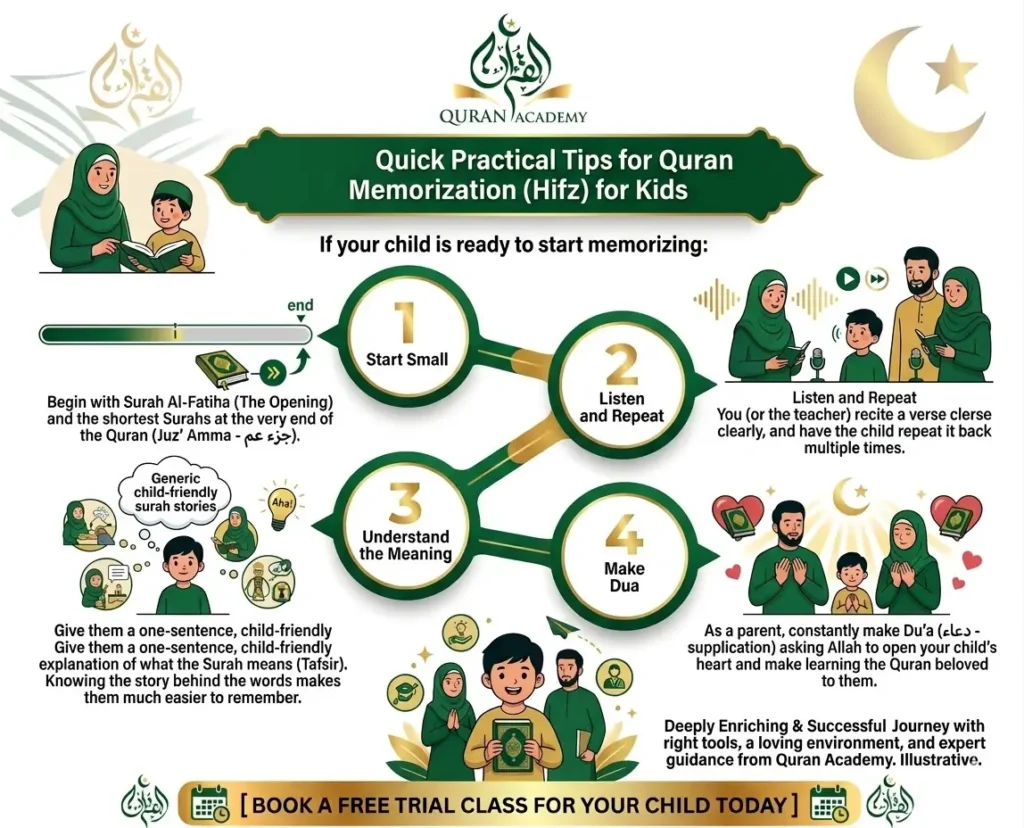
Quick Practical Tips for Quran Memorization (Hifz) for Kids
If your child is ready to start memorizing:
Start Small: Begin with Surah Al-Fatiha (The Opening) and the shortest Surahs at the very end of the Quran (Juz’ Amma – جزء عم).
Listen and Repeat: You (or the teacher) recite a verse clearly, and have the child repeat it back multiple times.
Understand the Meaning: Give them a one-sentence, child-friendly explanation of what the Surah means (Tafsir). Knowing the story behind the words makes them much easier to remember.
Make Dua: As a parent, constantly make Du’a (دعاء – supplication) asking Allah to open your child’s heart and make learning the Quran beloved to them.
With the right tools, a loving environment, and expert guidance from Quran Academy, teaching your child the Quran can be a deeply enriching and successful journey.
[BOOK A FREE TRIAL CLASS FOR YOUR CHILD TODAY]
Frequently Asked Questions (FAQs)
Kids can formally start learning the Quran (beginning with the Arabic alphabet or Noorani Qaida) around 4 to 6 years old. At this age, their cognitive abilities and memory are prime for language acquisition. However, passive learning—like listening to Quran recitations in the house—can and should begin from infancy.
For young children (under 8 years old), 15 to 20 minutes of highly focused, interactive learning per day is ideal. As they grow older and their attention spans increase, you can gradually extend the sessions to 30 or 45 minutes. Consistency (practicing every single day) is far more important than the length of a single session.
Yes, understanding the meaning is crucial. While young kids might not grasp complex theological Tafsir, giving them a simple, age-appropriate summary of what a Surah is about helps deepen their connection to Islam. It transforms the Quran from “just sounds to memorize” into a meaningful guide for their lives.
Motivation comes from making the process enjoyable and rewarding. Use gamification, colorful interactive apps, and engaging storytelling. Celebrate their small victories with sticker charts or small treats. Most importantly, parents must lead by example; if a child sees their parents reading and loving the Quran, they will naturally want to emulate that behavior.





No comment