
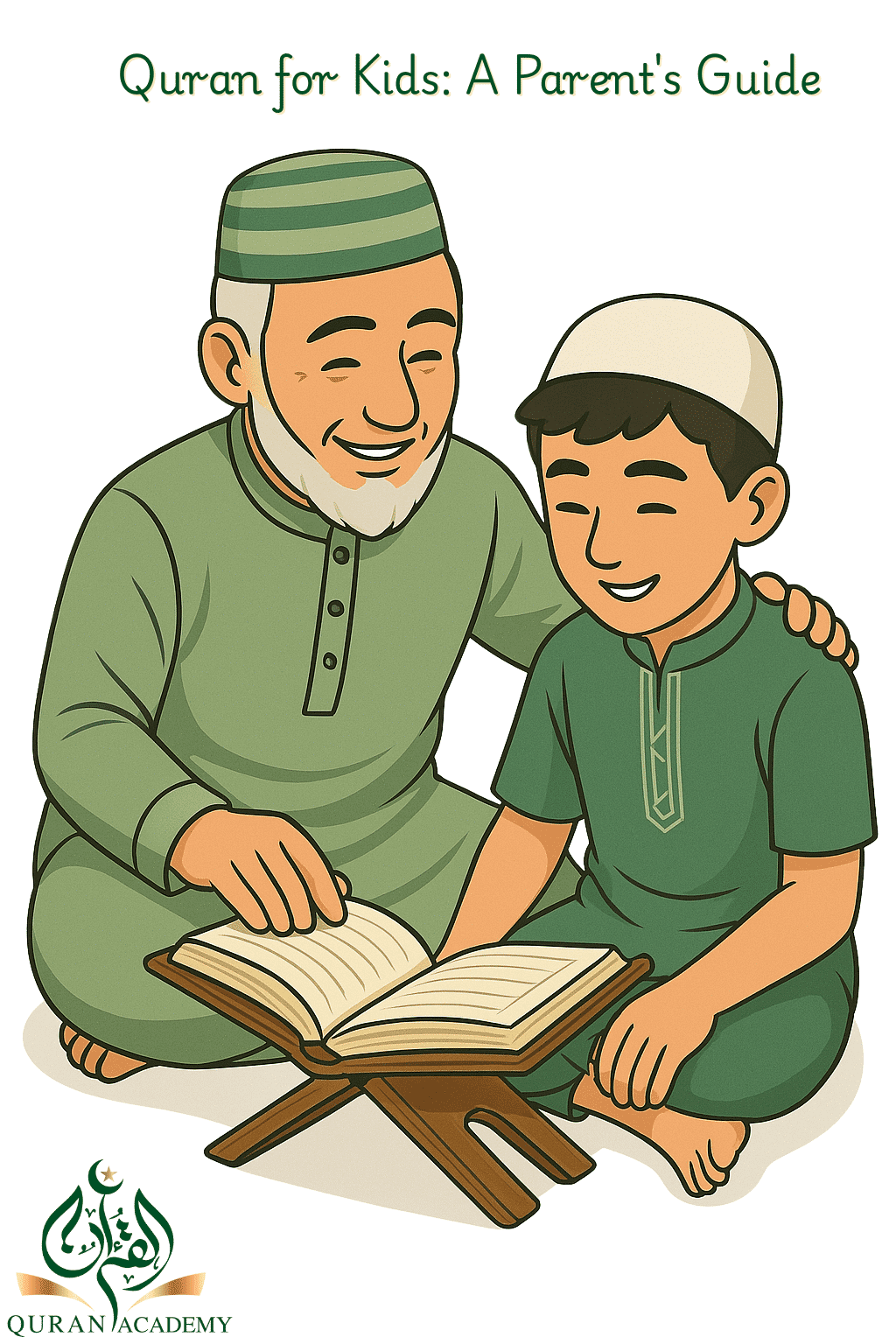
At Quran Academy, we understand these questions deeply. With years of experience in Islamic education, we’ve developed “Quran for Kids: A Parent’s Guide” specifically to empower you, the parent, in this blessed journey.
This comprehensive guide is designed to transform the way your family approaches Quranic learning. It’s not just about memorization; it’s about building a lifelong love for Allah’s words.
Inside “Quran for Kids: A Parent’s Guide,” you will discover:
- Effective Teaching Methods: Learn age-appropriate techniques to introduce Quran recitation and memorization (Hifdh) in a fun and interactive way.
- Building a Quranic Environment: Tips on creating a home atmosphere that encourages spiritual growth and a strong bond with the Quran.
- Instilling Islamic Values: How to integrate Quranic teachings into daily life lessons, fostering strong character and noble morals.
- Overcoming Common Challenges: Practical solutions for parents dealing with distractions, lack of motivation, or other hurdles in their child’s learning journey.
- Recommended Resources: A curated list of beneficial tools, apps, and materials to support your efforts.
Don’t let the task of teaching Quran feel overwhelming. Our “Parent’s Guide” breaks down the process into manageable, actionable steps, making it accessible for every parent, regardless of their own level of Quranic knowledge.
Empower yourself to guide your children on the most rewarding path.
download” Quran_for_Kids_A_Parents_Guide “ PDF from Quran Academy today and embark on this beautiful, transformative journey with your family!
Book a free trial today at [Quran Academy] to kickstart your child’s Quranic journey.
Quran for Kids
“Quran for Kids” refers to educational programs or resources specifically designed to teach the Holy Quran to children. These programs aim to make learning the Quran engaging, accessible, and enjoyable for young learners, fostering a strong connection with Islamic teachings from an early age.
At Quran Academy, a “Quran for Kids” program typically focuses on:
- Foundational Arabic Letters (Noorani Qaida/Al-Qaeda Al-Noorania): Teaching children to recognize and pronounce Arabic alphabets correctly, which is crucial for proper Quranic recitation.
- Basic Tajweed Rules: Introducing the fundamental rules of Tajweed (proper pronunciation and recitation of the Quran) in a simplified, child-friendly manner. This ensures they learn to recite accurately from the start.
- Short Surahs Memorization (Hifdh): Guiding children through the memorization of short Surahs (chapters) from the Quran, often starting with the last Juz’ (Amma Juz’).
- Stories from the Quran: Engaging children with captivating stories of Prophets (Anbiya) and historical events mentioned in the Quran, which helps them understand the context and wisdom of the verses.
- Islamic Manners and Values: Integrating lessons on core Islamic manners (Adab) and values (Akhlaq) derived from the Quran and Sunnah, such as honesty, kindness, respect for parents, and good character.
- Understanding Basic Quranic Vocabulary: Introducing simple Arabic words and their meanings from the Quran to help children grasp the message.
- Interactive and Fun Learning: Utilizing games, activities, visual aids, and engaging teaching methodologies to keep children motivated and make the learning process enjoyable.
The overall goal of a “Quran for Kids” program is to:
- Instill a love for the Quran and Allah’s words in young hearts.
- Provide a strong foundation for future Quranic studies.
- Nurture an early understanding and practice of Islamic principles.
- Build confidence in reading, reciting, and memorizing the Quran.
These programs are usually taught by qualified and patient teachers who understand child psychology and effective pedagogical approaches for young learners.
Okay, here’s a short promotional article for “Quran for Kids: A Parent’s Guide” from Quran Academy:
Using Technology to Teach the Quran
Using technology to teach the Quran can be incredibly effective and engaging for learners of all ages, especially children. Here’s a summary of how it’s commonly utilized:
-
Interactive Apps and Software:
- Arabic Alphabet and Tajweed Apps: Many apps gamify learning the Arabic alphabet, pronunciation, and basic Tajweed rules through interactive exercises, quizzes, and animated lessons.
- Quran Apps with Audio: These allow users to listen to recitations by various Qaris (reciters), follow along with the text, and often include translations and transliterations. This is excellent for learning correct pronunciation and rhythm.
- Memorization Aids: Apps can help track memorization progress, repeat specific verses, and identify areas needing more practice.
-
Online Quran Classes:
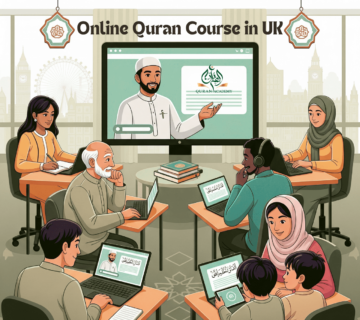
- Live Tutoring: Platforms offer one-on-one or group classes with qualified Quran teachers via video conferencing. This provides personalized feedback, Tajweed correction, and guidance that self-study might lack.
- Structured Courses: Online academies provide comprehensive courses in Quran recitation, memorization, Tajweed, and understanding, often with structured curricula and assessments.
-
Digital Resources and Multimedia:
- Educational Videos: YouTube channels and other platforms offer animated videos explaining Quranic stories, the meanings of surahs, and basic Islamic concepts in a child-friendly format.
- Anasheed (Islamic Songs): Digital music platforms provide access to Islamic songs that teach Quranic verses, Arabic letters, or good manners in a melodious way.
- E-books and Digital Libraries: Access to digital Qurans, children’s Islamic books, and simplified commentaries (Tafsir).
-
Benefits of Technology in Quranic Education:
- Engagement: Interactive elements, visuals, and audio make learning more stimulating and fun.
- Accessibility: Learning can happen anytime, anywhere, overcoming geographical barriers.
- Personalization: Some apps and online classes can adapt to a learner’s pace and style.
- Variety: Offers diverse methods to cater to different learning preferences (visual, auditory, kinesthetic).
- Parental Support: Provides resources for parents who may not be fluent in Arabic or Tajweed themselves.
Parents can book a free trial session to experience firsthand how technology can engage and educate kids in Quranic studies.
With tools like online Quran memorization courses, tajweed rules, and Tafsir guidance, children can now learn the Quran conveniently and efficiently from the comfort of their homes.
Is the Quran for Kids program suitable for all age groups?
The Quran for Kids program is specifically tailored to cater to children of all age groups.
By employing techniques for easy Hifz, Quranic knowledge, Quran methods and techniques, and Tajweed rules, this program ensures that children can comprehend and memorize the Quran effectively.
Whether they are beginners looking to enhance their recitation skills or more advanced learners delving into Tafsir, the Quran Memorization Course and Quran Recitation course offered are beneficial for all.
With a focus on helping children memorize with Tajweed, this program guarantees a well-rounded Quranic education suitable for kids of every age.
How can parents encourage their children to learn the Quran?
parents can employ various techniques for easy Hifz and Quranic knowledge acquisition:
Tajweed Rules: Focus on correct pronunciation and recitation skills.
Tafsir: Explain the meanings of verses to enhance understanding.
Memorize with Tajweed: Enroll kids in a Quran Memorization Course or Quran Recitation course for structured learning.
By incorporating these strategies, parents can create a supportive environment that fosters a love for the Quran in their children, making learning a rewarding and enriching experience.
What online resources are available for Quran learning for kids?
A: The digital age offers a plethora of online resources to assist children in learning the Quran. These include:
- Online Quran Schools: Platforms like Quran Academy provide structured Quranic education, including memorization, recitation, and Tajweed lessons.
- Quranic Apps: Mobile applications like QuranicAudio and Al Quran Al Karim offer Quranic recitation, translations, and tafsir.
- YouTube Channels: Many Islamic YouTube channels offer Quranic recitations, educational videos, and children’s stories.
- Interactive Websites: Websites like Quran academy Online provide interactive lessons and quizzes.
What are the benefits of teaching the Quran to children at a young age?
Teaching the Quran to children at a young age offers numerous benefits, including:
- Spiritual Growth: It cultivates a strong connection with the divine and fosters a sense of spirituality.
- Moral Development: The Quranic teachings instill moral values, ethics, and good character.
- Cognitive Development: Learning the Quran enhances memory, concentration, and analytical thinking skills.
- Language Skills: It improves language skills, including vocabulary, grammar, and pronunciation.
- Cultural Heritage: It connects children to their Islamic heritage and traditions.
How can technology be incorporated into Quran lessons for kids?
Technology can significantly enhance Quranic education for children:
- Interactive Learning: Quran Academy offer interactive lessons, quizzes, and games to make learning fun and engaging.
- Personalized Learning: Children can learn at their own pace and revisit lessons as needed.
- Remote Learning: Quran Academy allow children to learn from qualified teachers from anywhere in the world.
- Digital Quranic Libraries: Access to a vast library of Quranic recitations, translations, and tafsir.
- Mobile Apps: Quranic apps can be used for daily Quranic practice, memorization, and recitation.





No comment