

Understanding Arkan Al Iman: The 6 Pillars of Faith in Islam - Quran Academy
The Islamic faith is built upon a profound and unshakable foundation of inner convictions and outward practices. While outward religious duties are highly visible, the internal framework that validates these actions is known as Arkan Al Iman (The Pillars of Faith). Understanding these fundamental beliefs is absolutely essential for every Muslim, as they represent the absolute core of Islamic theology. Without a firm belief in these pillars, outward acts of worship lack their spiritual essence.
What is Arkan Iman?
When discussing what is arkan Iman, we are referring to the six foundational tenets of Islamic belief. To write arkan al iman in arabic (أركان الإيمان), it literally translates to “The Pillars of Faith.” These pillars are the internal, deeply held convictions in a Muslim’s heart. Understanding these tenets—often referred to as the articles of faith or iman karyam in english—is crucial for spiritual salvation.
These six pillars are universally derived from the Holy Quran and the authentic Sunnah (teachings) of Prophet Muhammad (peace be upon him – PBUH). They were most famously summarized in the renowned Hadith of Gabriel (Jibril), where the Archangel Gabriel appeared in human form to ask the Prophet about the definitions of Islam (outward submission), Iman (inward faith), and Ihsan (spiritual excellence).
The Difference: Arkan Al Islam vs. Arkan Al Iman
A very common area of confusion for new learners and students is distinguishing between faith (Iman) and practice (Islam).
Many searchers mistakenly look for the phrase arkan iman 5, confusing the internal beliefs with the outward practices. To clarify:
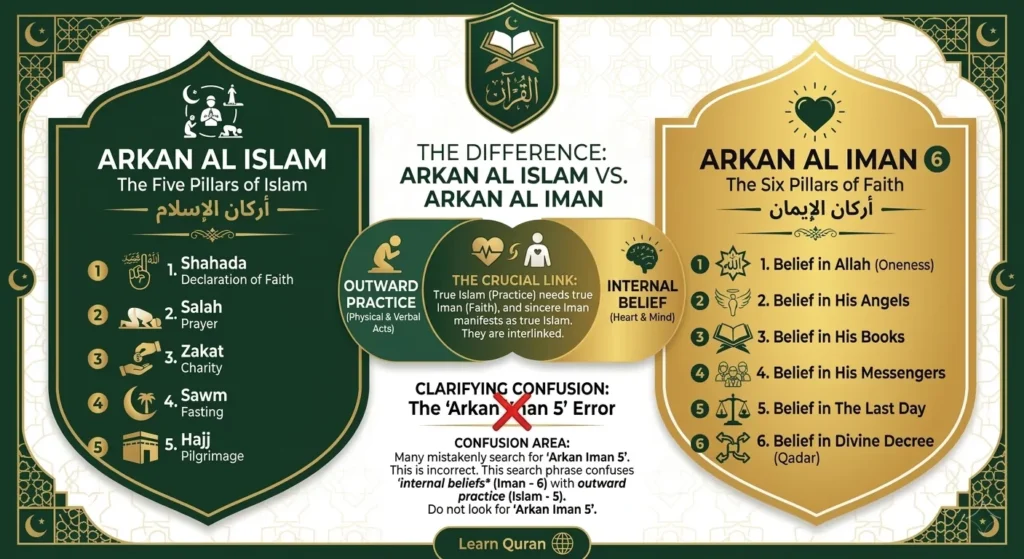
Arkan Al Islam: These are the Five Pillars of Islam. Written as arkan al islam in arabic (أركان الإسلام), these represent the physical and verbal acts of worship: the declaration of faith (Shahada), prayer (Salah), charity (Zakat), fasting in Ramadan (Sawm), and pilgrimage (Hajj).
Arkan Al Iman 6: The comprehensive arkan al iman 6 framework consists of the Six Pillars of Faith. These are strictly internal beliefs that reside in the heart and mind.
You cannot have true Islam without Iman, and true Iman naturally manifests into the outward actions of Islam.
The 6 Pillars of Iman in Quran and Sunnah
The foundation for the 6 pillars of iman in quran is firmly established in verses such as Surah Al-Baqarah (2:177), which clearly outlines what constitutes true righteousness. Here is a detailed breakdown of each of the six pillars:
1. Belief in Allah (God) - الإيمان بالله
This is the ultimate foundation of the Islamic faith. Belief in Allah requires the absolute affirmation of Tawhid (Islamic Monotheism). This pillar is not merely believing that God exists, but encompasses three distinct dimensions:
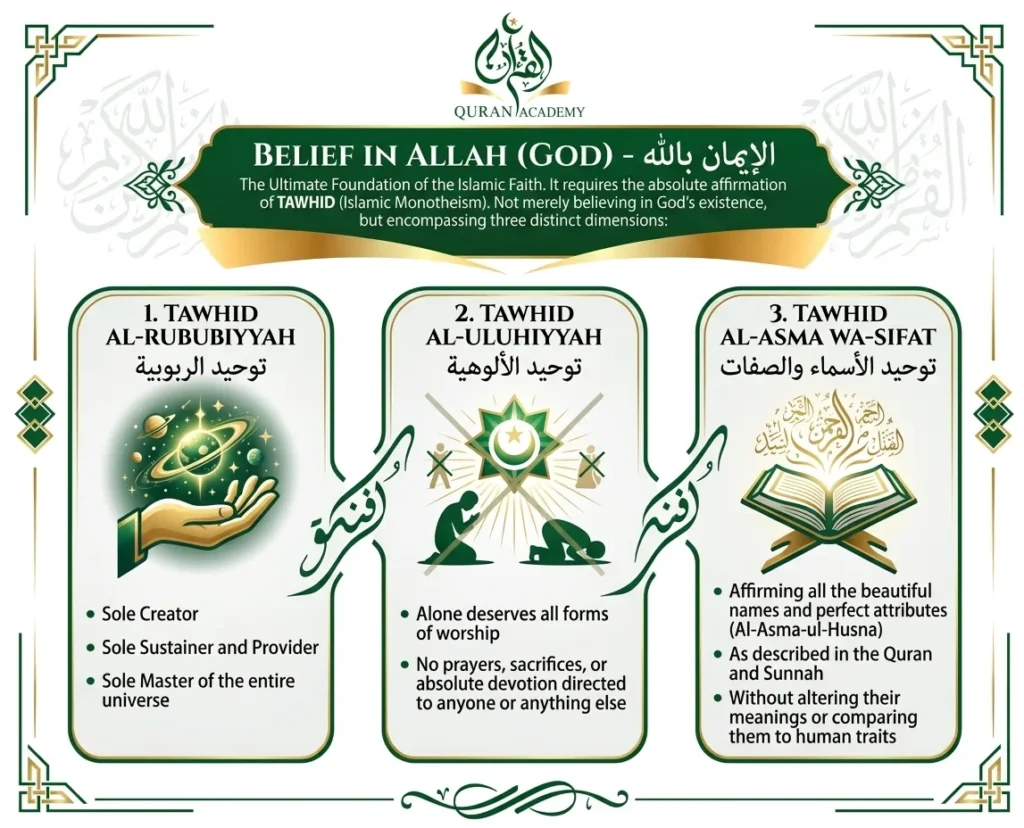
Tawhid al-Rububiyyah (Oneness of Lordship): Believing that Allah is the sole Creator, Sustainer, Provider, and Master of the entire universe.
Tawhid al-Uluhiyyah (Oneness of Worship): Believing that Allah alone deserves all forms of worship. No prayers, sacrifices, or absolute devotion can be directed to anyone or anything else.
Tawhid al-Asma wa-Sifat (Oneness of Names and Attributes): Affirming all the beautiful names and perfect attributes of Allah (Al-Asma-ul-Husna) as described in the Quran and Sunnah, without altering their meanings or comparing them to human traits.
2. Belief in His Angels - الإيمان بالملائكة
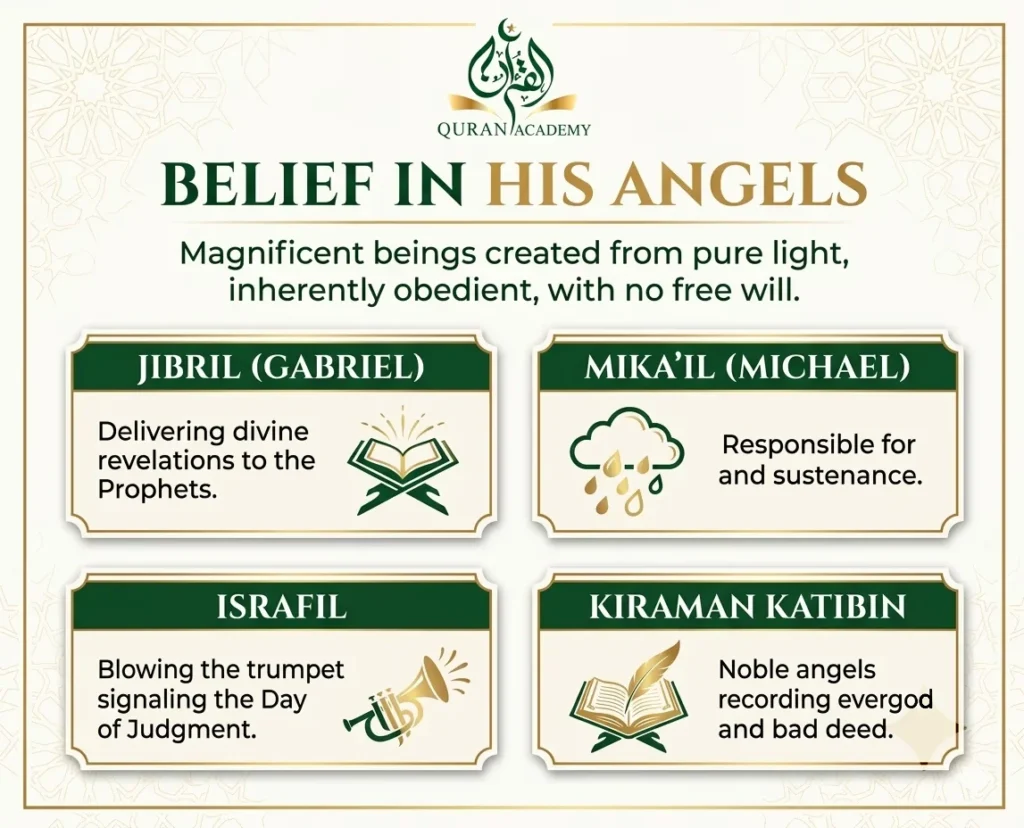
Muslims believe in the unseen realm of angels (Mala’ikah). Angels are magnificent beings created by Allah from pure light. Unlike humans or Jinn, angels do not possess free will; they are inherently obedient and perfectly carry out Allah’s commands without fatigue or hesitation.
They have specific duties in the universe. For instance:
Jibril (Gabriel): Tasked with delivering divine revelations to the Prophets.
Mika’il (Michael): Responsible for the rain and sustenance.
Israfil: The angel appointed to blow the trumpet signaling the Day of Judgment.
Kiraman Katibin: The noble recording angels who document every human’s good and bad deeds.
3. Belief in His Books (Revealed Scriptures) - الإيمان بالكتب السماوية
A Muslim must believe in all the original divine books and scrolls that Allah revealed to His messengers throughout history to guide humanity. This belief includes:
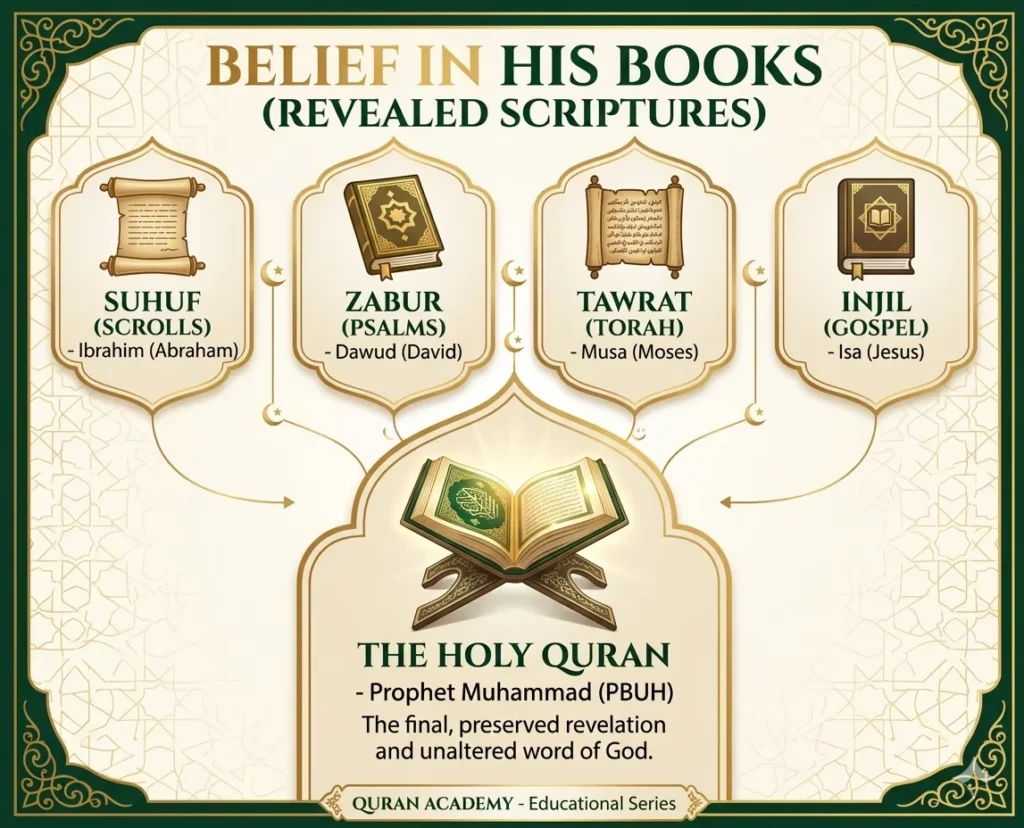
The Suhuf (Scrolls) given to Ibrahim (Abraham).
The Zabur (Psalms) given to Dawud (David).
The Tawrat (Torah) given to Musa (Moses).
The Injil (Gospel) given to Isa (Jesus).
The Holy Quran: The final, universal, and perfectly preserved revelation given to Prophet Muhammad (PBUH). Muslims believe the Quran is the literal, unaltered word of God, confirming the truth of the previous scriptures and abrogating the laws within them, as those previous texts suffered from human alteration over time.
4. Belief in His Messengers (Prophets) - الإيمان بالرسل
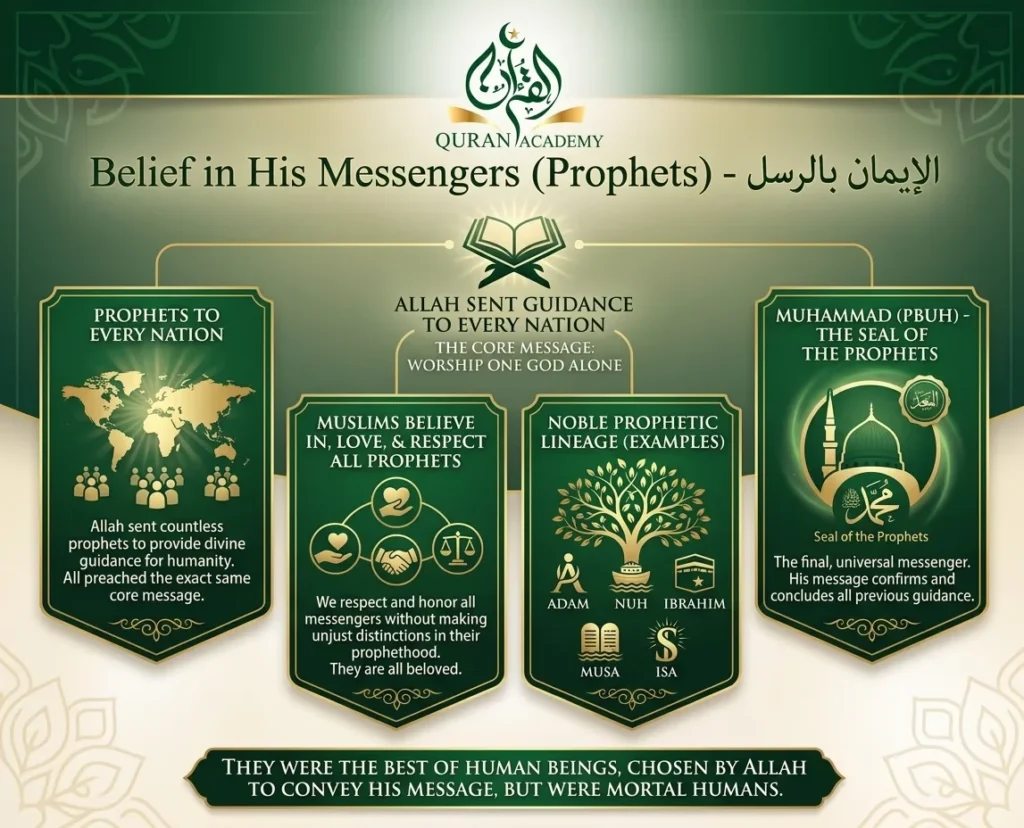
Islam teaches that Allah did not leave humanity without guidance. He sent countless prophets and messengers to every nation, all preaching the exact same core message: worship one God alone.
Muslims must believe in, love, and respect all the Prophets without making unjust distinctions regarding their prophethood. This noble lineage includes Adam, Nuh (Noah), Ibrahim (Abraham), Musa (Moses), Isa (Jesus), and concludes with Muhammad (PBUH), the Seal of the Prophets. They were the best of human beings, chosen specifically by Allah to convey His message, but they were mortal humans and not divine.
5. Belief in the Last Day (Day of Judgment) - الإيمان باليوم الآخر
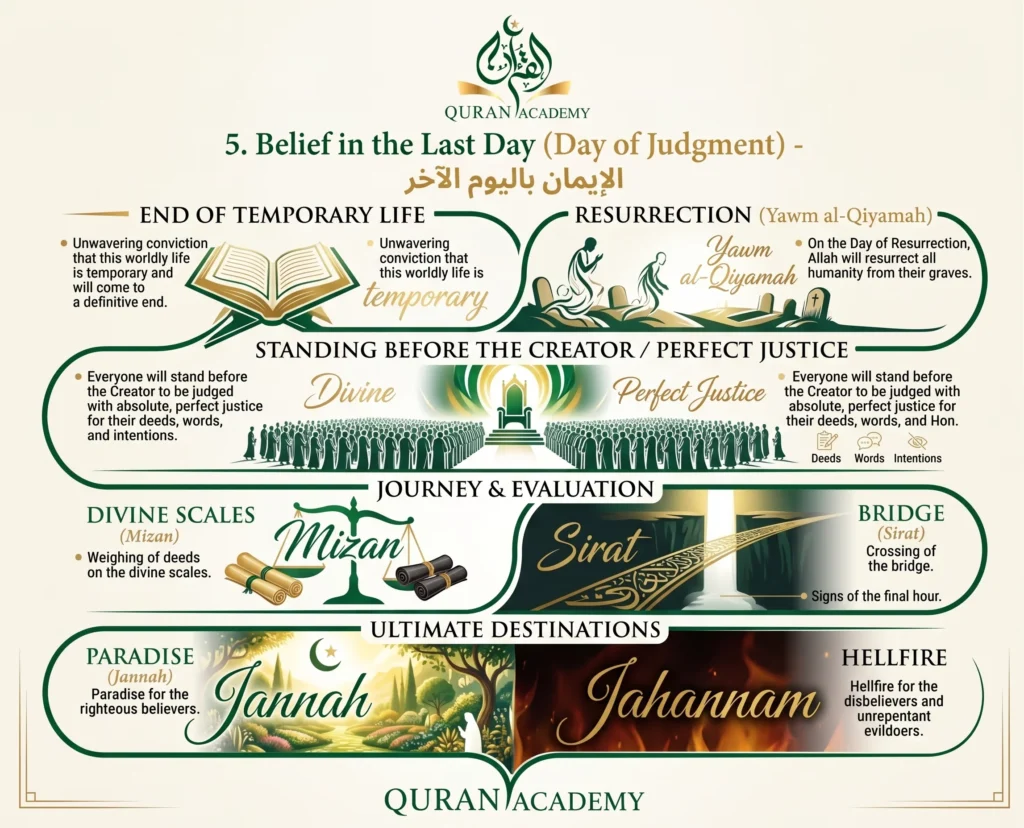
This pillar involves the unwavering conviction that this worldly life is temporary and will come to a definitive end. On the Day of Resurrection (Yawm al-Qiyamah), Allah will resurrect all humanity from their graves. Everyone will stand before the Creator to be judged with absolute, perfect justice for their deeds, words, and intentions.
This belief encompasses the signs of the final hour, the weighing of deeds on the divine scales (Mizan), the crossing of the bridge (Sirat), and the ultimate eternal destinations: Paradise (Jannah) for the righteous believers, and Hellfire (Jahannam) for the disbelievers and unrepentant evildoers.
6. Belief in Divine Decree (Predestination) - Al-Qadar (القدر)
Belief in Al-Qadar is the conviction that everything that happens in the universe—whether perceived as good or bad—occurs by Allah’s ultimate will, prior knowledge, and infinite wisdom. This pillar involves four levels:
Knowledge: Allah has eternal, complete knowledge of everything that has happened, is happening, and will happen.
Writing: Allah wrote the destiny of all creation in Al-Lawh Al-Mahfuz (The Preserved Tablet) long before the creation of the heavens and the earth.
Will: Nothing occurs in the universe unless Allah wills it to occur.
Creation: Allah is the ultimate creator of all things, including human actions.
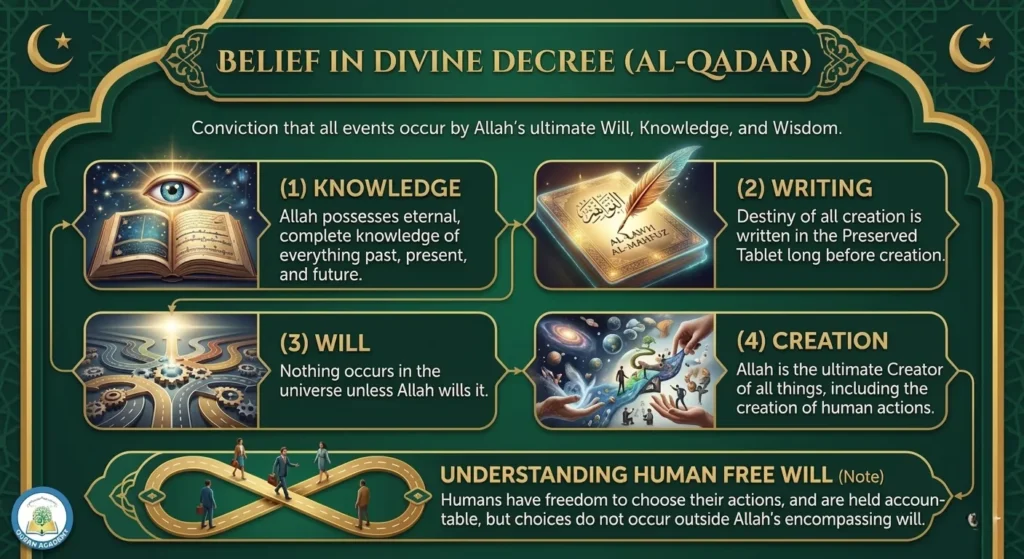
Note: Believing in Qadar does not cancel human free will. Humans have the freedom to choose their actions, and they are held accountable for those choices, but those choices do not occur outside of Allah’s encompassing will.
The Importance of Arkan Al Iman
Upholding these six pillars transforms a person’s worldview and shapes their daily behavior.
Spiritual Resilience: Believing in Divine Decree (Qadar) provides immense comfort during hardships, preventing despair. It fosters Tawakkul (deep reliance on Allah).
Moral Accountability: The belief in angels recording deeds and the impending Day of Judgment instills a strong moral compass, preventing hidden sins and encouraging public and private righteousness.
Global Unity: Regardless of cultural backgrounds, all Muslims are bound together by these identical core beliefs, creating a unified global community (Ummah).
Can Arkan Al Iman Vary Among Different Islamic Sects?
The absolute core of these six pillars is universally accepted across mainstream Islam. While there might be nuanced theological debates regarding the exact interpretation of specific attributes of Allah or the precise mechanics of predestination between different historical schools of thought (such as differences between Sunni and some Shia interpretations), the fundamental necessity of believing in Allah, His Angels, Books, Messengers, the Last Day, and Fate is a unifying consensus among all Muslims.
Deepen Your Islamic Knowledge with Quran Academy
Whether you are a new Muslim searching for basic foundational knowledge, a parent looking to teach your children the core tenets, or a student seeking advanced theological resources (like exploring arkan iman in urdu or profound Arabic Tafsir), Quran Academy is your ultimate learning destination.
Our certified native instructors provide structured, comprehensive online courses covering Islamic creed (Aqeedah), proper Quranic recitation (Tajweed), and Arabic language mastery.
Strengthen your Iman today. Book your free trial class right now: https://quraan-academy.com/free-trial/
Frequently Asked Questions (FAQs)
The 6 pillars of Iman (Faith) are the absolute core beliefs of Islam. They are: 1) Belief in Allah, 2) Belief in His Angels, 3) Belief in His Divine Books, 4) Belief in His Prophets and Messengers, 5) Belief in the Day of Judgment (The Last Day), and 6) Belief in Divine Decree (Al-Qadar – Fate).
Arkan Iman translates from Arabic as “The Pillars of Faith.” It refers to the internal, unseen convictions that must firmly reside in a Muslim’s heart to validate their faith, as opposed to Arkan Al Islam, which refers to outward physical acts of worship like prayer and fasting.
This is a common misconception. There are 6 pillars of Iman (Faith), not 5. People often confuse this with the 5 pillars of Islam (Arkan Al Islam), which are the physical practices: Shahada (Declaration of faith), Salah (Prayer), Zakat (Charity), Sawm (Fasting), and Hajj (Pilgrimage).
The only woman mentioned by her proper name in the Holy Quran is Maryam (Mary), the mother of Prophet Isa (Jesus). She is highly revered in Islam as one of the most righteous and pure women to ever live, and an entire chapter of the Quran (Surah Maryam) is named in her honor, directly tying into the Islamic belief in Prophets and revealed Books.




I precisely needed to appreciate you again. I am not sure what I could possibly have tried in the absence of the ideas documented by you over such theme. It was a very horrifying scenario in my view, but being able to view the very well-written technique you handled that made me to leap for contentment. I am just happy for the help as well as hope that you know what an amazing job you are providing instructing other individuals via your website. Most probably you’ve never met all of us.
This is one awesome article post.Thanks Again. Want more.
Hey there! Would you mind if I share your blog with my zynga group? There’s a lot of folks that I think would really enjoy your content. Please let me know. Thanks
I’ve felt deeply transformed by the [LEKJP Method](#). It showed me how to heal old wounds and step into a new version of myself.
I truly loved was the balance between science and spirituality. It’s gentle yet powerful.